
Seeds of Change: How Ghana's Farmers and Students Are Fighting Climate Change From the Roots Up
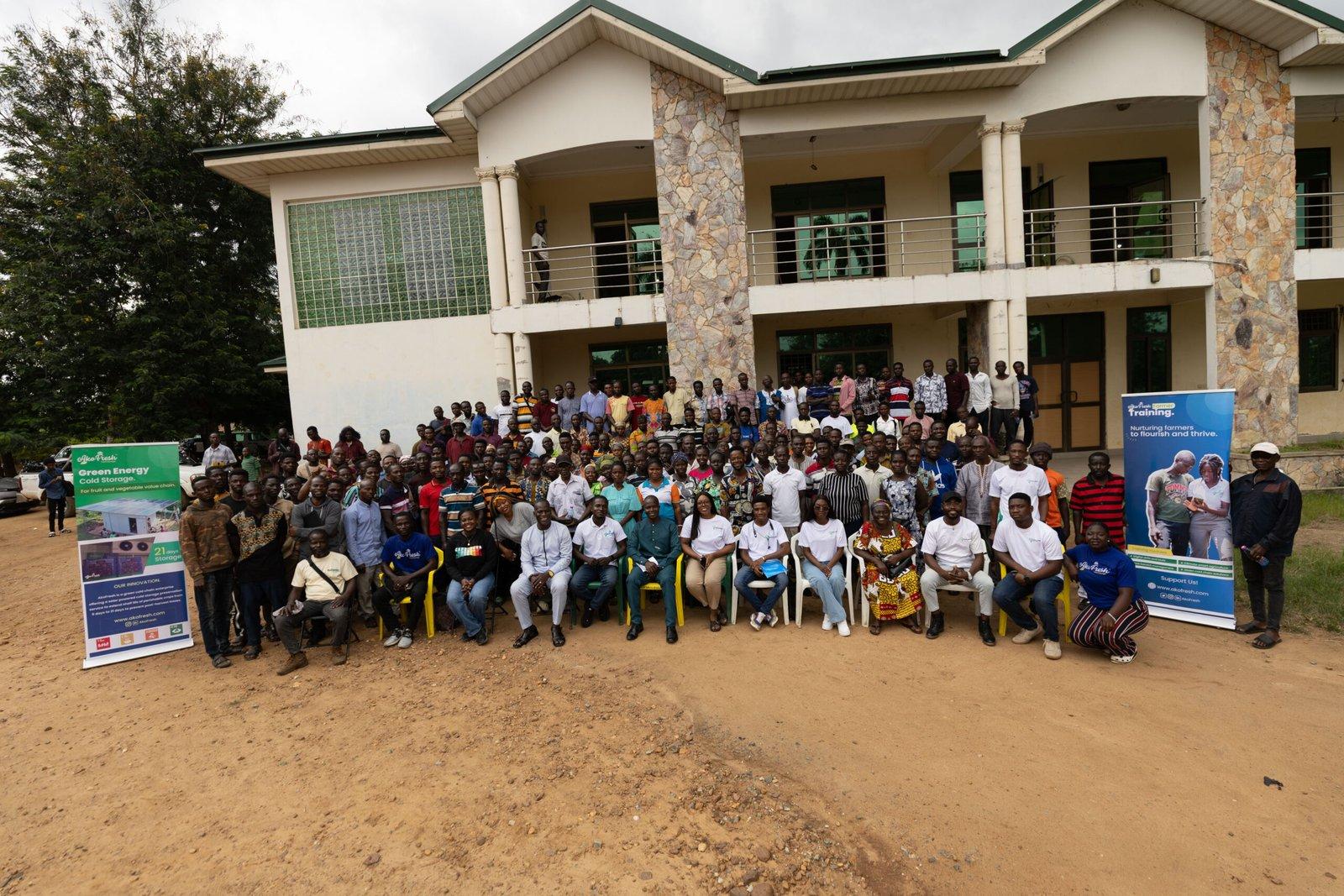
From the farming communities of Nkawkaw to the school compounds of the Central Region, Eco-Africa Network is taking climate action where it matters most — to the people living it every day.
In the Kwahu West Municipality of Ghana's Eastern Region, the rains no longer come when they should. Farmers who have worked the same land for generations now plant by guesswork, watching the sky for signals that no longer follow the patterns their parents taught them. Yields are down. The soil is tired. And for many smallholder farmers especially women and young people, the situation feels increasingly out of their hands.
Several hundred kilometres away, in the school compounds of the Central Region, students spend their days under a sun that grows more unforgiving every year. Green spaces are shrinking. Shade trees that once cooled classrooms and playgrounds have disappeared. Many young people have never planted a tree, and have little connection to the natural systems their futures depend on.
These two realities the struggling farmer and the disconnected student are both symptoms of the same crisis. And Eco-Africa Network is responding to both, simultaneously, through two complementary initiatives launching this year: the Climate-Smart Agriculture and Legal Literacy Training Programme in Nkawkaw, and the 2026 Green Schools Tree Planting Initiative on World Environment Day.
Teaching Farmers to Fight Back — With Knowledge
The 2nd edition of the Climate-Smart Agriculture and Legal Literacy Training Programme, scheduled for August 5, 2026 in Nkawkaw, is built on a simple but powerful premise: farmers cannot adapt to what they do not understand, and they cannot defend what they do not know they have the right to protect.
Nkawkaw, the capital of the Kwahu West Municipality, sitting along the Accra-Kumasi highway is a major agricultural hub where communities rely heavily on the cultivation of cocoa, oil palm, plantain, cassava, and maize. It is also a community where erratic rainfall, soil degradation, and declining yields are becoming the new normal. Eco-Africa Network selected Nkawkaw precisely because of these pressures, and because of the community's strong farming presence and openness to change.
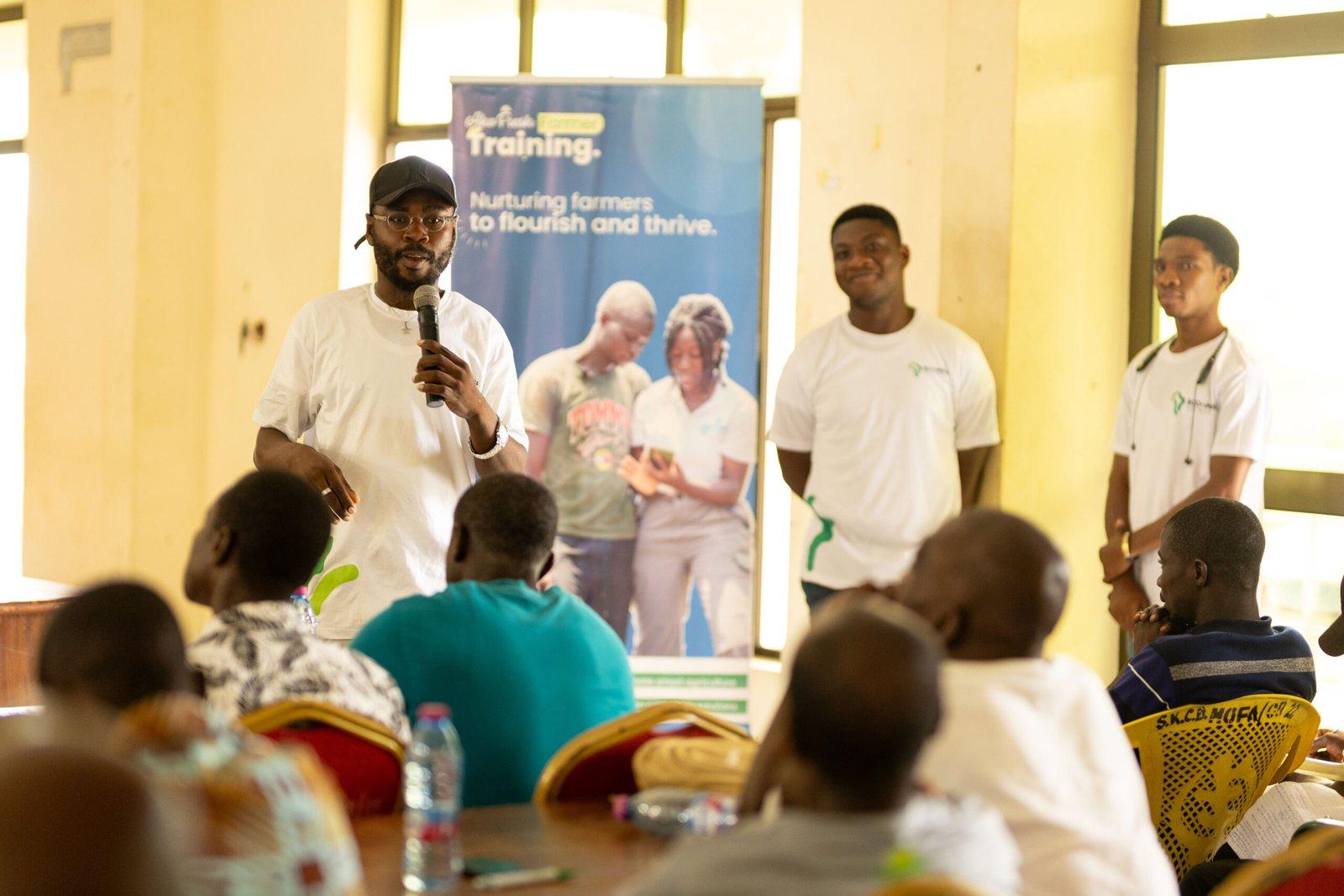
The training programme is a three-way partnership between Eco-Africa Network, Law Lab, and the Africa Center for Nature-Based Climate Action (AC4NCA). Each partner brings a distinct but complementary expertise. AC4NCA leads sessions on nature-based and climate-smart agricultural practices — equipping farmers with sustainable techniques that work with the land rather than against it. Law Lab leads the legal literacy component, covering land tenure, environmental regulations, and how farmers can navigate and protect their rights in agricultural contracts. Eco-Africa Network anchors the climate justice thread, helping participants understand not just the science of climate change, but the systemic inequalities that make it hit hardest among the most vulnerable.
"Farmers cannot adapt to what they do not understand, and they cannot defend what they do not know they have the right to protect." —AC4NCA
The training is deliberately designed for those most often left out of climate conversations: women and youth. In many rural Ghanaian communities, women do the majority of the agricultural labour but are frequently excluded from decision-making, land ownership, and access to training. This programme treats their participation not as a quota to fill but as a prerequisite for any meaningful change.
By the time the training concludes and follow-up evaluations are completed in the third week of August, the programme aims to have reached 300 to 400 farmers — equipped with practical skills to improve yields, reduce post-harvest losses, and understand the legal frameworks that govern their land and their livelihoods.
The sustainability plan is equally considered. Rather than a one-off intervention, the training is designed to leave behind knowledge, materials, and partnerships with local agricultural extension officers that can support farmers long after the sessions end. Participant feedback will feed directly into the next edition of the programme, making it a learning process as much as a teaching one.
500 Trees, Two Schools, One Generation Ready to Lead
On June 5, 2026 — World Environment Day — Eco-Africa Network planted 500 trees across two Senior High Schools in Ghana's Central Region. It was not just a planting exercise. It was a statement: young people are not the climate generation of the future. They are the climate generation of now.
The 2026 Green Schools Tree Planting Initiative is the second edition of a programme that began in 2025, when 250 trees were planted at Hohoe EP Senior High School in the Volta Region. That first edition proved both the appetite for this kind of engagement among students and the tangible impact it could have on school environments. The 2026 edition doubled the ambition — 500 trees, two schools, 1,500 to 2,000 students directly engaged.
The problem the initiative addresses is straightforward but often overlooked. Ghanaian schools, particularly those in rapidly developing communities, are losing their green cover. As tree canopies disappear, classrooms and playgrounds get hotter. Air quality worsens. And students grow up without a practical connection to the natural environment — without the experience of planting something, caring for it, and watching it grow.
"Young people are not the climate generation of the future. They are the climate generation of now." — Eco-Africa Network
The event day programme was designed to be more than a photo opportunity. It opened with a climate education workshop, giving students the scientific and policy context for what they were about to do. A demonstration of proper planting techniques followed — teaching not just the mechanics but the why behind species selection, spacing, and soil care. Then students, teachers, volunteers, and partners planted together, side by side.
The trees selected are hardy native species, chosen for their climate resilience and their suitability to the local ecosystem. The target is a survival rate of 80 percent or more after 12 months — a bar that requires sustained commitment well beyond event day. To ensure that, the programme established student Green Ambassadors at each school: young people assigned responsibility for monitoring, watering, and advocating for the trees they helped plant.
The ripple effects extend beyond the school gates. Improved shade and air quality benefit surrounding communities. Biodiversity improves at the local level. And perhaps most importantly, an entire cohort of students moves through their formative years with the lived experience of environmental stewardship — something that no classroom lesson alone can provide.
Two Programmes, One Vision
What connects a farmer in Nkawkaw learning about soil restoration with a student in the Central Region planting a native tree? More than geography separates them, but the same logic drives both interventions: lasting climate resilience is built from the ground up, in communities, with the people who are most affected.
Eco-Africa Network's approach — training farmers while greening schools, teaching legal rights while building environmental habits — reflects an understanding that climate action cannot be a single-issue, single-audience effort. The crisis is interconnected. The response must be too.
Ghana is not waiting for the world to solve its climate problem. In Nkawkaw, farmers are learning to adapt. In the Central Region, students are learning to restore. These are not small things. They are exactly the kind of community-rooted, youth-driven, solutions-focused action that climate advocates around the world say is needed — and that too rarely gets the attention it deserves.
Eco-Africa Network will document both initiatives and publish reports on outcomes, community feedback, and lessons learned. Partners, donors, and media interested in supporting or covering these programmes are encouraged to reach out.
— Mohammed Kamil
Communications - Eco-Africa Network