
Roots of Resilience: Why Planting Trees Is One of the Most Powerful Things We Can Do for Our Planet
Introduction
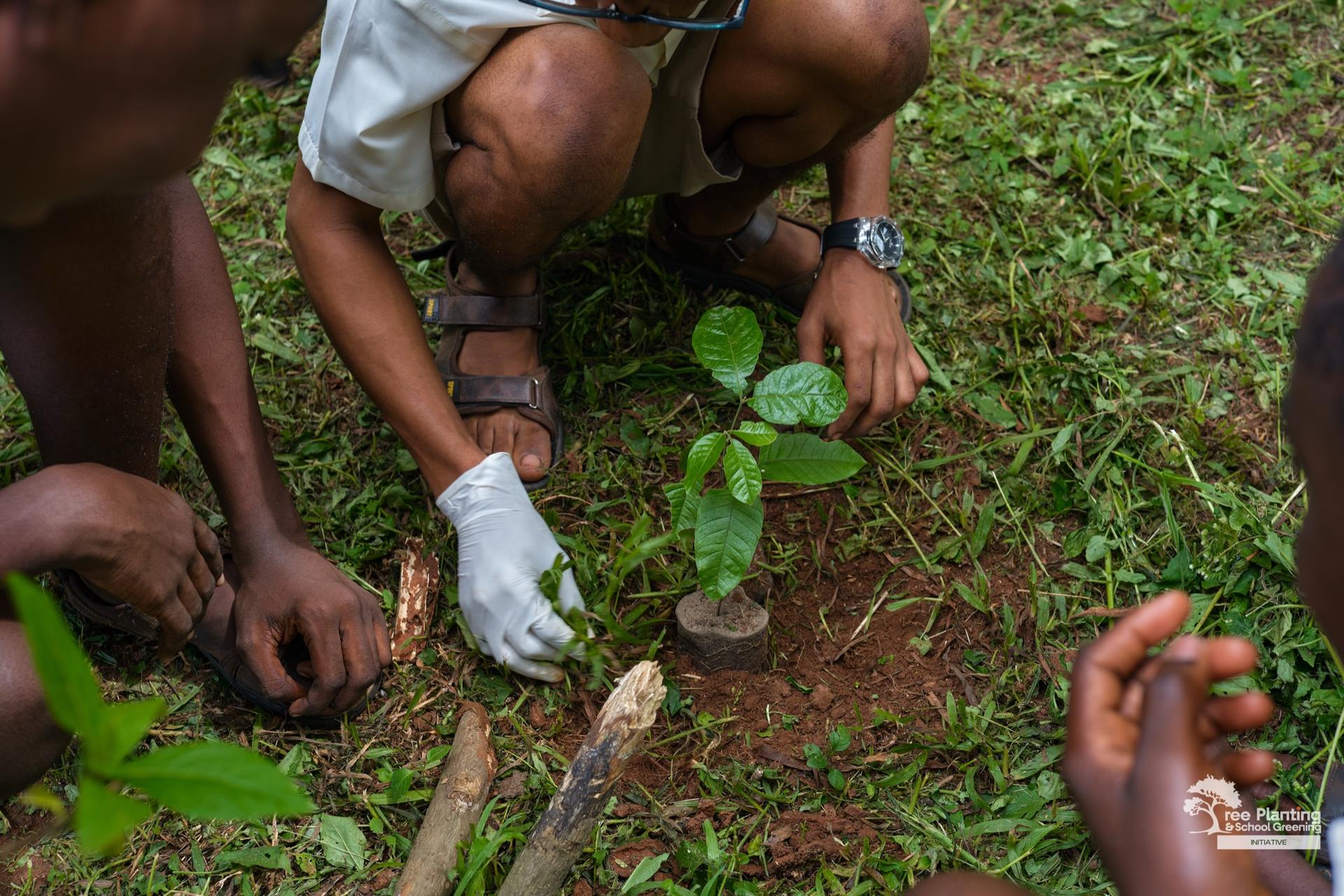
The roots of a tree are an act of profound faith. They require no advanced degree, no complex algorithm, and no government approval. They cost next to nothing, yet their dividends compound for decades. In an era where the climate crisis often feels too vast and abstract to comprehend, this simple, quiet act of putting a seed or a seedling into the soil remains one of our most powerful, and most underestimated, tools for healing the planet (Sileshi et al., 2009). And yet, all around us, the opposite is happening. We keep cutting them down.
Globally, the loss of tropical primary forests in 2024 reached a staggering 6.7 million hectares, burning at a rate of 18 football fields every minute (World Resources Institute, 2025). The situation is particularly acute in Ghana. In 2022 alone, the nation lost 18,000 hectares of its precious primary forest, a nearly 70% increase from the previous year, representing the biggest jump in forest loss of any country in recent memory (Afele, 2024). Across Africa, from the cocoa farms of Ghana to the maize fields of Ethiopia, forests that have stood for centuries are being cleared for agriculture and development. The consequences are not found in distant scientific reports; they are felt in rising temperatures, erratic rainfall, and the deeply personal struggle of farmers trying to make sense of seasons that no longer behave the way their grandparents taught them (Afele, 2024). Planting a tree will not single-handedly solve the climate crisis. But it is an absolutely necessary part of the solution.
What a Tree Actually Does
Most of us have a general sense that trees are "good for the environment." But few of us appreciate the sheer volume of work a single tree performs over its lifetime. Depending on its species, age, and the soil it calls home, a tree absorbs anywhere between 10 and 40 kilograms of carbon dioxide from the atmosphere every single year (EcoTree, n.d.). When you multiply that by millions, you begin to understand why ecologists describe forests as "carbon sinks”; vast biological systems that pull greenhouse gases from the air and lock them away in wood, roots, and soil. At a time when atmospheric CO₂ concentrations are at a record high, this function is not just helpful; it is a matter of survival.
But carbon absorption is just one line on a very long list of a tree's résumé. Trees regulate temperature by casting shade and releasing moisture through their leaves, a process called transpiration. In densely built cities, where concrete and asphalt trap heat, this effect is a lifeline. The U.S. Environmental Protection Agency , 2025, notes that many urban areas can be up to 5.6°C (10°F) warmer than the surrounding countryside. A global synthesis of studies found that urban trees can lower pedestrian-level temperatures by up to 12°C through radiation blockage and transpiration (Li et al., 2024). In the schoolyards and market squares where people gather in the heat of the day, that difference is felt directly in the body.
Furthermore, trees intercept rainfall, reducing runoff and the erosion that strips precious topsoil from farmland. Their root systems act as nature's anchor, stabilizing slopes and riverbanks to reduce the risk of landslides and flooding. They filter pollutants from the air and provide food, medicine, timber, and fuel for millions of people. A tree is not one thing. A tree is an entire system (Dahanayake et al., 2024).
Trees and Food Security: An Anchor for Farmers
For the farming communities of Ghana, the conversation about trees is not an abstract environmental one. It is a deeply personal story about food security and survival.
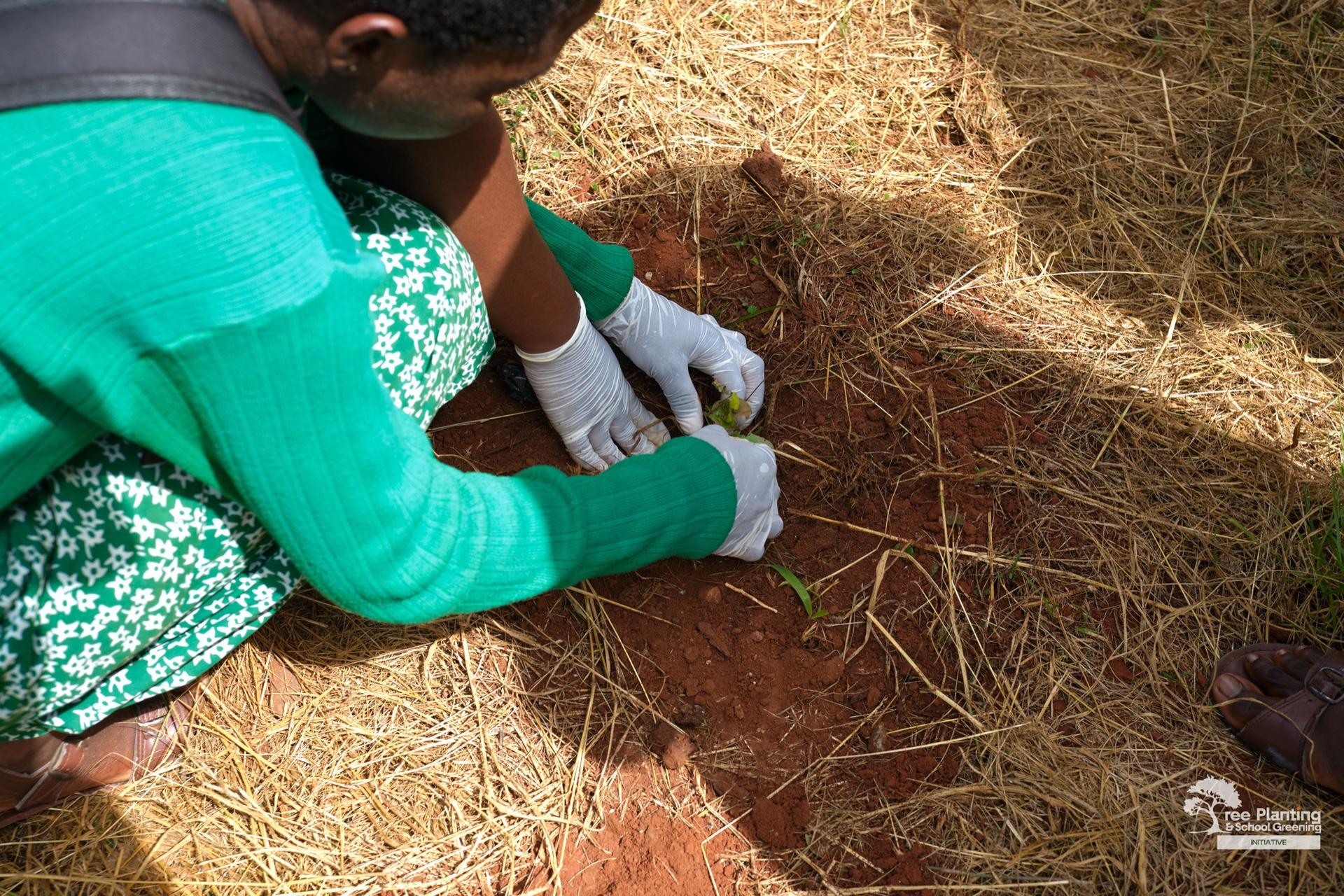
Consider Margaret Opoku, a 61-year-old farmer in the Offinso North District. For years, she grew maize on her land and watched her yields steadily decline, falling from "three trucks full to one" (Ettinger, 2026). Her neighbours advised her to let the land lie fallow. Instead, she accepted an offer for tree seedlings from a local NGO. "When I planted the trees, the soil became moister, with more nutrients than before," she recalls (Ettinger, 2026). She planted plantain for shade, and her trees, some now over four years old, have transformed her struggling farm into a thriving, resilient landscape. Thirty-eight other farmers in her community are now following her lead.
Margaret’s experience is backed by rigorous science. Across Sub-Saharan Africa, the practice of agroforestry, integrating trees directly into farmlands has been shown to improve soil fertility, retain moisture, and dramatically increase crop yields. A meta-analysis of over 90 studies found consistent evidence that planting nitrogen-fixing trees and shrubs leads to higher maize yields, even stabilizing crop production during drought years and other extreme weather events (G. Sileshi et al., 2008). Research has conclusively shown that with good management, "fertiliser trees" can double maize yields compared to local farming practices that use no external fertilizer (G. Sileshi et al., 2008). A separate meta-analysis of 126 studies across 19 African countries confirmed that agroforestry significantly increases crop yield, soil nitrogen, and organic carbon while reducing runoff and improving soil moisture (Kuyah et al., 2019). In communities where food insecurity tracks closely with climate variability, the presence of trees on a farm is not an aesthetic choice. It is a determinant of whether a family eats well or goes hungry.
The Challenge of Keeping a Tree Alive
It would be dishonest to romanticize tree planting without acknowledging its complications. Planting a tree is easy. Keeping it alive is much, much harder.
Across Africa, well-intentioned planting initiatives have sometimes produced impressive headline numbers while delivering disappointing ecological outcomes. Seedlings planted without adequate follow-up care, water, or protection from livestock often die in large numbers before they ever establish themselves. Research in Kenya found that while farmers planted all the trees they received, only 62% survived after six months and just 34% after one year, with survival rates strongly influenced by pests and land size (Kegode, 2025). A planting event that generates great photographs but results in 90% mortality after one year is not a conservation success; it is a missed opportunity.
This is why serious, effective initiatives prioritize monitoring, maintenance, and community ownership right alongside the planting itself. The goal is not to put seedlings in the ground; the goal is to grow trees. In South Africa, community-monitored baobab trees had a significantly higher survival rate than unguarded trees, with browsing and trampling being the main causes of death for unprotected seedlings (Khwilimba et al., 2026). The choice of species also matters profoundly. Native tree species consistently support local ecosystems more effectively than exotic ones, helping to preserve biodiversity (Tartaglia & Aronson, 2024). A five-year study in the Congo Basin found that several native species demonstrated growth, survival, and carbon sequestration performance comparable to fast-growing exotic species, suggesting that local trees are promising alternatives for restoration (Djiofack et al., 2025). Hardy, climate-resilient native species that can tolerate dry spells are the right investment for communities on the frontlines of a changing climate.
The Youth Dimension: Planting a Legacy
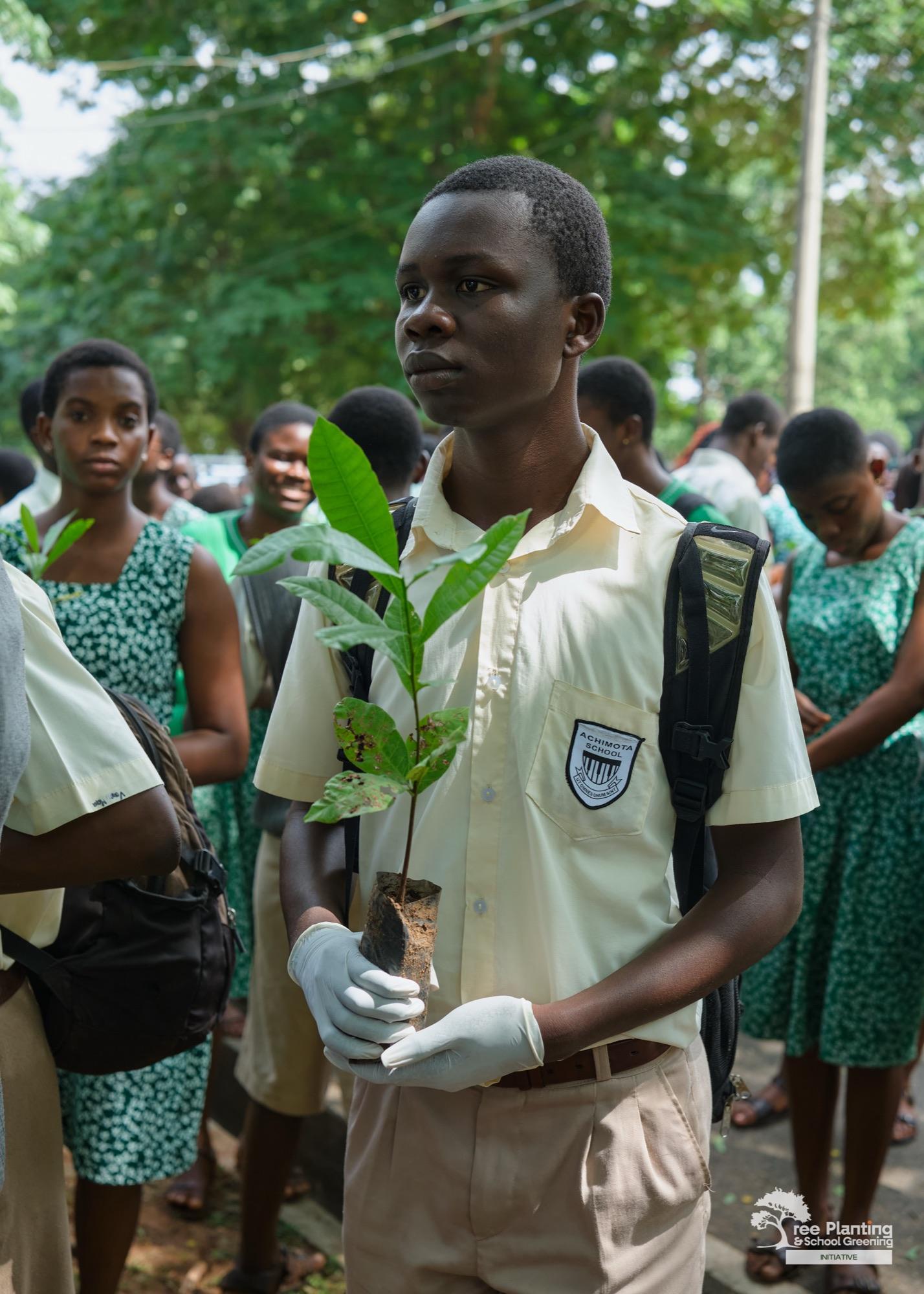
President John Dramani Mahama, President of Ghana, stated in 2026 during the World Environment Day Observation stated that there is a generational argument for tree planting that is not made often enough. The trees we plant today will likely outlive us. A child who puts a seedling in the ground this year and watches it grow through their school years and into their adult life develops a relationship with the natural world that no classroom lesson can fully replicate.
This is not a small thing. One of the biggest challenges in climate communication is helping people feel connected to a crisis whose most severe impacts unfold over decades. Tree planting does something rare: it makes the abstract tangible. It makes the relationship between a human action and an environmental outcome visible and deeply personal. This is the philosophy behind Ghana's "One Tree Per Child Initiative," a nationwide program designed to engage every school-aged child in planting and caring for at least one tree. The orientation that is cultivated in childhood, a sense of stewardship and long-term thinking, shapes the kind of citizens, farmers, and leaders they will become.
Conclusion: A Simple Act With Profound Consequences
The sheer scale of the climate crisis can make any individual action feel inadequate. And in a narrow sense, that is true. No number of tree planting days will substitute for the systemic transformation of energy systems, industrial agriculture, and land use policy that a truly livable future requires. (Hampton & Whitmarsh, 2023)
But trees matter. They matter for the air we breathe today, the temperatures we endure this season, the food we grow this year, and the carbon we keep out of the atmosphere for the next generation. They matter for the school child sitting in the heat, the farmer like Margaret Opoku watching the soil crack, and the community whose river has silted up because the hillside above it was cleared. A 12-year study across West Africa found that between 2013 and 2025, vegetation declined by a staggering 298,000 hectares in Ghana, an area equivalent to losing the size of Edinburgh each year, with forest loss directly linked to deteriorating surface water quality, leaving millions exposed to unsafe drinking water (WaterAid & Tree Aid, 2025).
Planting a tree is not a gesture. It is a commitment to a future that is cooler, greener, and more alive than the one we are currently building. The roots we put in the ground today are the resilience we will draw on tomorrow.
References
- Afele, J. (2024). Ghana’s forests are being wiped out: what’s behind this and why attempts to stop it aren’t working. The Conversation. https://doi.org/10.64628/aaj.gpj5nctq5
- Akinnifesi, F. K., Ajayi, O. C., Sileshi, G., Chirwa, P. W., & Chianu, J. (2022). Fertiliser trees for sustainable food security in the maize-based production systems of East and Southern Africa. A review. In Sustainable Agriculture Reviews (Vol. 50). Springer. https://resilient-landscapes.org/mf_publication/fertiliser-trees-for-sustainable-food-security-in-the-maize-based-production-systems-of-east-and-southern-africa-a-review/
- Dahanayake, A. C., Webb, J. A., Greet, J., & Brookes, J. D. (2024). How do plants reduce erosion? An Eco Evidence assessment. Plant Ecology, 225(6), 593–604. https://doi.org/10.1007/s11258-024-01414-9
- EcoTree. (n.d.). How much CO2 does a tree absorb? Let's get carbon curious! https://ecotree.green/en/how-much-co2-does-a-tree-absorb
- Ettinger, J. (2026, May 11). Margaret Opoku planted trees on her struggling Maize farm, now 38 farmers are following her lead. One Tree Planted. https://onetreeplanted.org/blogs/stories/ghana-woman-farmer-reforestation
- Hampton, S., & Whitmarsh, L. (2023). Choices for climate action: A review of the multiple roles individuals play. One Earth, 6(9), 1157–1172. https://doi.org/10.1016/j.oneear.2023.08.006
- Kegode, H. (2025). Abstract: Tree planting survival rates in Kenya. Tropentag 2025.
- Kuyah, S., Whitney, C. W., Jonsson, M., Sileshi, G. W., Öborn, I., Muthuri, C. W., & Luedeling, E. (2019). Agroforestry delivers a win-win solution for ecosystem services in sub-Saharan Africa. A meta-analysis. Agronomy for Sustainable Development, 39(5). https://doi.org/10.1007/s13593-019-0589-8
- Tartaglia, E. S., & Aronson, M. F. (2024). Plant native: comparing biodiversity benefits, ecosystem services provisioning, and plant performance of native and non-native plants in urban horticulture. Urban Ecosystems, 27(6), 2587–2611. https://doi.org/10.1007/s11252-024-01610-5.
- Li, H., Zhao, Y., Wang, C., Ürge-Vorsatz, D., Carmeliet, J., & Bardhan, R. (2024). Cooling efficacy of trees across cities is determined by background climate, urban morphology, and tree trait. Communications Earth & Environment, 5(1). https://doi.org/10.1038/s43247-024-01908-4
- Mahama, J. D. (2025, June 6). 'The future is not something we enter; it is something we create' - Mahama on World Environment Day. GhanaWeb. https://www.ghanaweb.com/GhanaHomePage/NewsArchive/The-future-is-not-something-we-enter-it-is-something-we-create-Mahama-on-World-Environment-Day-1986909
- Sileshi, G., Akinnifesi, F. K., Ajayi, O. C., & Place, F. (2008). Meta-analysis of maize yield response to woody and herbaceous legumes in sub-Saharan Africa. Plant and Soil, 307(1–2), 1–19. https://doi.org/10.1007/s11104-008-9547-y
- Sileshi, G. W., Akinnifesi, F. K., Ajayi, O. C., & Place, F. (2009). Evidence for Impact of green fertilizers on maize production in Sub-Saharan Africa: A Meta-analysis. World Agroforestry Centre, 10. https://www.cabdirect.org/cabdirect/abstract/20133063835
- Using trees and vegetation to reduce heat islands | US EPA. (2025, December 9). US EPA. https://www.epa.gov/heatislands/using-trees-and-vegetation-reduce-heat-islands
- Djiofack, B. Y., Bourland, N., Beeckman, H., Cerutti, P. O., Fai, C. D., Van Hulle, M., Pierson, M., Mayaux, J., Luambua, N. K., Musepena, D., Belanganayi, B. L., Laurent, F., Ilondea, B. A., Van Den Bulcke, J., & Hubau, W. (2025). The potential of native tree species for forest restoration in the Central Congo Basin. Ecological Engineering, 217, 107662. https://doi.org/10.1016/j.ecoleng.2025.107662
- Khwilimba, G., Swanepoel, L. H., & Venter, S. M. (2026). The involvement of community members significantly increases the success of tree planting projects – a case study of baobab (Adansonia digitata L.) planting, South Africa. Trees Forests and People, 25, 101254. https://doi.org/10.1016/j.tfp.2026.101254
- WaterAid & Tree Aid. (2025). Roots & rivers: How deforestation affects freshwater access in Ghana, Niger and Nigeria. WaterAid. https://washmatters.wateraid.org/sites/g/files/jkxoof256/files/2025-11/Roots-rivers-how-deforestation-affects-freshwater-access.pdf
- World Resources Institute. (2025, May 21). RELEASE: Global forest loss shatters records in 2024, fueled by massive fires. https://www.wri.org/news/release-global-forest-loss-shatters-records-2024-fueled-massive-fires