
Ghana has renewed its renewable energy plan. Can it renew its delivery?
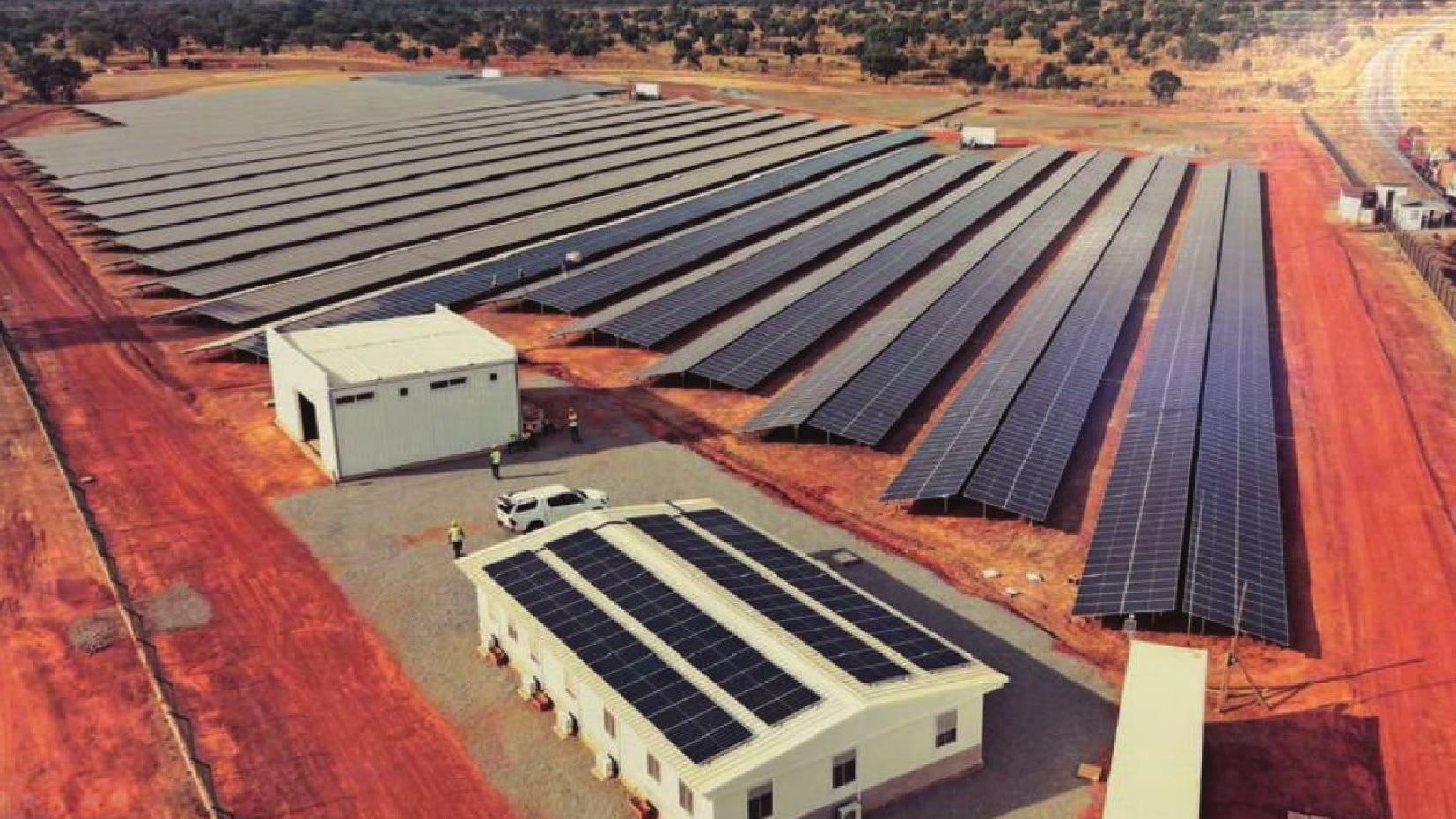
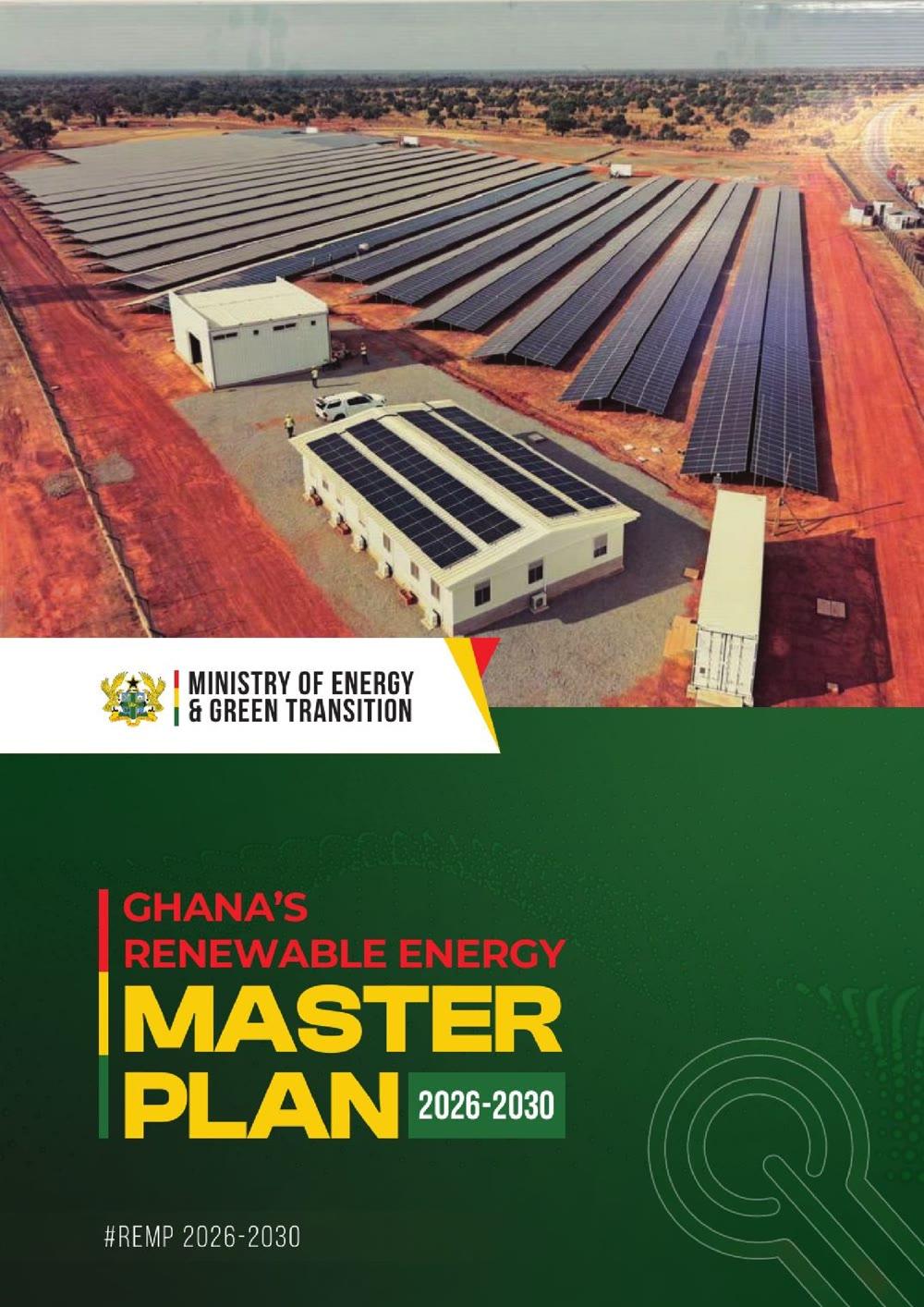
Photo: cover of Ghana’s Renewable Energy Master Plan 2026–2030, © Ministry of Energy and Green Transition (source).
Ghana does not need an introduction to renewable electricity. Akosombo, Kpong and Bui have made hydropower part of the country's economic life. Yet Ghana still faces a renewable energy challenge. The apparent contradiction disappears once we distinguish our established hydroelectric system from the solar, wind and other technologies that have struggled to achieve comparable scale.
The Energy Commission's 2026 Energy Outlook reports that thermal plants supplied 66.8% of Ghana's electricity generation in 2025, hydropower 32.4%, and other renewables just 0.8%. These are generation shares, not shares of installed capacity, and they should not be treated as a complete inventory of every rooftop system. They nevertheless capture the central imbalance: Ghana has considerable renewable resources, but its electricity supply remains heavily dependent on thermal generation. [1]
There is another distinction worth making, renewable energy extends beyond electricity. It includes energy for cooking, heating, irrigation and agricultural processing. A solar pump that helps a farmer cultivate through a dry season may never contribute a unit of electricity to the national grid. Its economic value can still be substantial. Understanding this broader purpose is essential to reading Ghana's Renewable Energy Master Plan, or REMP.
The August 2026 update offers a more ambitious programme for several technologies, a frank assessment of past difficulties and a revised approach to implementation. But the strongest test of the document is whether its response matches its own diagnosis. Ghana's difficulty has rarely been imagining what renewable energy could achieve. It has been organising institutions, finance and infrastructure to achieve it consistently.
The plan before the update
The 2019 REMP was an investment framework running to 2030, organised into three implementation cycles: 2019-2020, 2021-2025 and 2026-2030. The new document updates that final cycle. It is therefore a continuation and revision of an existing programme, rather than a completely new national starting point. [2, 3]
The original plan sought to expand renewable capacity, excluding large hydropower, from a 2015 baseline of 42.5 MW to 1,363.63 MW by 2030. It also envisaged decentralised electrification for 1,000 off-grid communities, less dependence on biomass for thermal applications, and stronger local participation in the industry. Its development agenda included irrigation, crop drying, manufacturing, research and employment. [2]
That history matters because several attractive features of the update have substantial precedents. Gender inclusion, local manufacturing, concessional finance, institutional coordination and monitoring were already present in 2019. Their reappearance is evidence of continuity. Whether it represents progress depends on what has changed in the arrangements for delivering them.
For example, the earlier plan proposed a Coordinating Unit, a steering structure and implementing entities. It also provided for reporting and evaluation. The update now acknowledges that the Coordinating Unit was never established, citing uncertainty over its institutional positioning and leadership. It connects this failure to weak monitoring and difficulties collecting information for the review. [2, 3]
That is a significant admission. A country can produce a technically competent plan and still fail to establish the administrative machinery on which the plan depends. The lesson is larger than a dispute over institutional location: assigning a responsibility on paper does not establish a functioning institution with staff, authority and a budget.
What the stocktake actually tells us
The update's estimated progress figures reveal a mixed record. By 2025, distributed solar had reached 86 MWp against a target of 100 MWp. Utility-scale solar stood at 183.1 MWp against 347.5 MWp. Domestic improved biomass cookstoves substantially exceeded their numerical target. These achievements should not disappear inside a blanket account of failure. [3, Table 1]
But other gaps are striking. Solar irrigation covered an estimated 204 hectares against a target of 26,150 hectares, less than 1%. Mini- and micro-grids numbered eight against a target of 200. Utility-scale wind remained at zero against 275 MWp. The contrast suggests that Ghana's challenge is uneven execution across technologies and business models, rather than a universal inability to deploy renewable energy. [3, Table 1]
These figures are the plan's estimates, not an independently audited national performance assessment. That qualification is especially important because the document itself identifies weaknesses in monitoring. The stocktake should initiate a more transparent evidence system, with definitions, sources and verification methods available to the public.
Even the successful indicators deserve closer examination. Counting cookstoves distributed does not establish how regularly households use them, whether they continue using traditional fires alongside them, or what reductions in fuel consumption and harmful exposure actually result. Similarly, an installed mini-grid may exist without providing reliable and affordable service. Delivery must eventually be measured through outcomes as well as equipment.
A larger ambition, with some important reductions
For 2026-2030, the revised programme proposes additions of 852 MWp of utility-scale solar, 214 MWp of distributed solar and 709 MWp of utility-scale wind. It includes 440 mini-grids, associated with 100 MW of capacity, and 1,970 MWh of battery storage. These are targets for the implementation period. They should not be casually presented as Ghana's total installed capacity in 2030. [3, Table E1]
The direction is clear. Ghana wants a much larger contribution from variable renewable electricity, supported by storage and decentralised systems. The inclusion of electric vehicle charging also connects power planning to emerging transport demand.
Yet ambition has not increased uniformly. The original plan allocated 20,000 additional hectares of solar irrigation to its 2026-2030 cycle; the update specifies 10,000. Crop dryers fall from 300 units to 100, and solar water heaters from 65,000 to 5,000. These comparisons concern the same five-year cycle, rather than a cumulative 2030 target compared with a five-year addition. [2, Table E1; 3, Table E1]
Lower targets are not inherently poor policy. Revising an unrealistic target can improve credibility. Technologies can lose attractiveness, competing programmes can take over responsibilities, and available finance can change. But the explanation matters. Given the very weak irrigation performance, readers should be able to understand how the revised agricultural targets were chosen and what will make the smaller programme deliverable.
A transition that adds substantial electricity capacity while leaving farmers unable to finance a pump would be incomplete. Agricultural energy programmes need water-resource assessment, maintenance, credit, extension support and routes to market. Cheaper pumping can also encourage excessive water abstraction if water governance is neglected. Energy planning should connect these responsibilities before procurement begins.
The world has moved. Ghana's constraints remain local
Ghana is revising its plan during a rapid expansion of renewable power. IRENA reports that the world added 692 GW of renewable capacity in 2025, accounting for 85.6% of all new power capacity. Africa added a record 11.3 GW, but that was only about 1.6% of the global renewable addition. These are capacity figures, include hydropower and are not directly comparable with Ghana's non-hydro electricity generation share. [4]
The comparison nevertheless offers a useful warning. A global technological expansion does not automatically produce an African investment expansion. Access to equipment is only part of the equation. Project preparation, financing terms, currency exposure, credible purchasers and grid access determine whether technical potential becomes a financeable investment.
The update recognises several of these obstacles, including high domestic interest rates, weak utility creditworthiness and underused financing mechanisms. Its estimated investment requirement is approximately US$10.8 billion. That is a statement of resources needed, not evidence that those resources have been secured. [3, Chapters 2 and 5]
Nor should it be compared mechanically with the original plan's roughly US$5.6 billion investment estimate. The time periods, technology portfolios and assumptions differ. A useful comparison would separate changes in quantities, prices, scope and financing conditions.
The proposed financing architecture therefore needs a public explanation of committed funds, prospective funds and remaining gaps. A renewable energy investment fund can help, but naming a fund does not capitalise it. Investors and communities need to know its eligibility rules, financial instruments, allocation criteria and reporting obligations. The same clarity is needed on competitive procurement and the payment arrangements behind projects selling electricity to utilities.
The grid is part of the project
The electricity network deserves particular attention because solar and wind targets can run ahead of the infrastructure required to use their output. The update acknowledges transmission and distribution constraints and proposes reinforcement, smarter grids and storage-related measures. This is a welcome recognition that integration is a system task. [3]
The problem is global. The International Energy Agency reports that more than 2,500 GW of renewable, storage and large electricity-demand projects are stalled in grid connection queues worldwide. It also notes that major new grids can take five to fifteen years to plan, permit and complete, while solar and wind projects can take one to five years. Those international ranges are not forecasts for Ghana, but the sequencing lesson is relevant. [5]
Each major Ghanaian project should therefore have a credible connection pathway, a named institution responsible for the required upgrades and a timetable aligned with commissioning. Grid readiness includes operational forecasting, protection systems, voltage and frequency management, and arrangements for curtailment. A list of proposed power plants cannot substitute for that work.
Storage requires equally careful scrutiny. The plan's 1,970 MWh target describes the quantity of energy that batteries can store. It does not, by itself, say how much power they can deliver at once or for how long. Those specifications determine whether batteries are addressing evening demand, short-term balancing, congestion or another service.
Table 10 assigns US$3.6 billion to battery storage, roughly a third of the headline investment requirement. A line of that significance warrants publication of its scope and assumptions: battery power ratings, discharge duration, network works, replacement costs, expected services and procurement approach. The figure should be examined through a transparent costing model before anyone concludes that it is either excessive or justified. [3, Table 10]
Who benefits, and in what form?
The update's projected employment total is approximately 353,000. The composition is revealing: Table 10 attributes 250,000 jobs to charcoal for local demand, around 71% of the stated total. Readers imagining that the headline mainly describes new solar technicians and wind engineers would therefore misunderstand the plan. [3, Table 10]
This is not a reason to dismiss biomass livelihoods. It is a reason to define the employment estimate. Are these newly created positions, existing livelihoods supported, temporary work or full-time equivalents? How do charcoal-related livelihoods evolve alongside cleaner cooking and sustainable woodfuel management? Employment claims become more useful when they explain the transition facing workers, rather than merely aggregate them.
The local manufacturing agenda also deserves support informed by experience. The update describes a solar manufacturing venture undermined by weak demand, import competition, technological change and excessive reliance on government purchases. Its proposed industrial support should respond to those commercial realities. [3, Chapters 2 and 6]
Ghana can build capabilities in installation, maintenance, engineering, mounting structures, electrical equipment and selected manufacturing activities. The appropriate mix should emerge from evidence on competitiveness and demand. Public procurement can develop a market, but durable industrial policy also needs quality assurance, dependable orders, technical skills and opportunities beyond a single government programme.
On gender, the document moves beyond general language towards focal structures, training, finance and disaggregated monitoring. Its own review acknowledges that women have remained more visible as cookstove beneficiaries than as participants in manufacturing, installation and decision-making. That diagnosis is valuable. [3, Chapters 2 and 6]
The practical test is whether women gain paid technical roles, ownership, procurement opportunities and authority over revenue. A woman managing a community energy or water facility should have access to maintenance support and finance, alongside responsibility for daily operations. Inclusion is more credible when participation brings resources and decision-making power.
Consistency must become observable
The revised governance arrangement places day-to-day responsibility within the Ministry's Renewable Energy and Green Transition Directorate, supported by a steering committee, technical working group and task teams. It explicitly assigns annual work plans, budgets, coordination and reporting. This is a constructive response to the earlier institutional failure. [3, Chapter 4]
It will be convincing when the public can see the responsible officers, funded activities and results. Future institutional changes should preserve accountability rather than postpone it. Implementation cannot remain conditional on the eventual establishment of another body.
The two plans are broadly consistent in their development objectives. They seek more renewable energy, wider access, stronger domestic participation and economic benefits beyond electricity generation. The update incorporates storage and emerging demand more explicitly, revises priorities and offers a more candid account of constraints. Its weakness is the risk that familiar implementation promises will remain difficult to verify.
A practical response would be to publish a funded annual delivery plan, a project register distinguishing proposals from financially committed projects, and a dashboard showing progress against stable definitions. Capacity figures should sit alongside service reliability, affordability, functioning irrigation, maintenance performance and livelihood outcomes. Independent researchers, civil society and institutions such as Ahabanmono Impact can help interrogate this evidence and communicate it to the public.
Ghana's updated REMP gives the country a worthwhile programme to pursue. Its candour about the past is a strength, and several of its changes respond to real shortcomings. But the next assessment should not have to reconstruct years of delivery from incomplete records. The most valuable promise Ghana can make now is that every major target will have an accountable institution, an identifiable financing route and evidence that citizens can inspect. That would make the update a change in how the country delivers, as well as what it hopes to build.
Sources
- Energy Commission (2026). 2026 Energy Outlook for Ghana, executive summary. https://www.energycom.gov.gh/index.php/planning/sub-codes?download=849:energy-outlook-for-ghana-2026
- Ministry of Energy and Energy Commission (2019). Ghana Renewable Energy Master Plan, especially Table E1 and Chapters 4, 6, 7 and 9. https://www.energycom.gov.gh/files/Renewable-Energy-Masterplan-February-2019.pdf
- Ministry of Energy and Green Transition (2026). Renewable Energy Master Plan 2026-2030, August update, especially Tables E1, 1 and 10 and Chapters 2, 4, 5, 6 and 7. https://www.undp.org/sites/g/files/zskgke326/files/2026-09/remp-update-aug2026.pdf
- IRENA (2026). Renewable Capacity Statistics 2026. https://www.irena.org/-/media/Files/IRENA/Agency/Publication/2026/Mar/IRENA_DAT_RE_capacity_statistics_2026.pdf
- International Energy Agency (2026). Electricity 2026, Grids. https://www.iea.org/reports/electricity-2026/grids
This article was written by Ahabanmono Impact.